Academic Paper Session – Publics and the Craft of Luxury Experience

Dr Debbie Coney
Winchester School of Art, Southampton
The Optimised Body: Embodied Luxury and the Pursuit of Peak Performance
Dr Debbie Coney is an award-winning academic, researcher and internationally recognised luxury brand strategist whose work is helping to redefine how luxury is understood in the twenty-first century. As Director for the MA Luxury Brand Management at the University of Southampton’s Winchester School of Art, she leads one of the UK’s established postgraduate luxury programmes and has developed an internationally recognised research portfolio spanning luxury branding, consumer behaviour, embodied experience and the future of luxury. Debbie has spent more than 25 years in senior international leadership roles and consulting with luxury brands including Aston Martin, Bacardi, Bentley, De Beers, Jo Malone London, and L’Oréal, bringing a distinctive scholar-practitioner perspective to her research. She is the author of a forthcoming Routledge monograph, a contributor to The Oxford Handbook of Luxury, founder of Coney Luxury, and host of The Thing About Luxury podcast.
Abstract
The Optimised Body: Embodied Luxury and the Pursuit of Peak Performance
Luxury has historically been associated with rare objects, inherited status and material excess. Increasingly, however, luxury is being lived through the disciplined cultivation of the body. Across sectors including luxury hospitality, wellness tourism, performance activewear and longevity medicine, exclusivity is shifting from the ownership of objects to the optimisation of physical and mental performance. Luxury is no longer simply worn or displayed; it is trained, measured and performed.
This paper examines the rise of embodied luxury, arguing that contemporary status is increasingly enacted through regimes of training, recovery and bodily enhancement. Drawing on theories of cultural capital (Bourdieu, 1984), neoliberal self-governance (Foucault, 2008), the experience economy (Pine & Gilmore, 1999), and contemporary research on transformative luxury experiences (Batat, 2022), the paper explores how luxury brands and elite consumers are reframing aspiration around health, resilience, and peak performance.
Empirical illustrations include the expansion of Aman Resorts’ longevity and performance programmes, the growth of performance-oriented innovative luxury activewear brands such as Lululemon, and the proliferation of biohacking clinics and recovery spaces integrated into luxury hospitality environments. Beyond branded spaces, the paper also considers the rising cultural visibility of ultra-endurance sports and performance travel, where participation in ultra-marathons, Ironman competitions and high-altitude training camps functions as a contemporary marker of distinction. These achievements are increasingly amplified through digital platforms and social media, where training data, transformation narratives and endurance milestones circulate as visible markers of discipline and distinction.
Within these contexts, the luxury subject is no longer defined by idle leisure but by disciplined optimisation. Slowness, recovery and mindfulness are commodified as tools for sustaining productivity and resilience within a broader culture of performance. Access to time-intensive training regimes, global race circuits and personalised longevity technologies becomes a new form of elite advantage.
Positioned within the temporal tensions highlighted by the IPOL 2026 theme—speed and endurance, urgency and longevity— this paper argues that embodied luxury signals a significant reconfiguration of how status, aspiration, and legitimacy are produced and performed in contemporary elite culture.

Dr Oonagh O’Hagan
Central Saint Martins / UAL
Incentive Aesthetics and Fashion Methadone: Luxury Without the Toxicity
Oonagh O’Hagan is a designer, researcher, Knowledge Exchange Leader and Senior Lecturer. Her recently completed PhD introduced Incentive Aesthetics, a framework exploring how the mechanisms traditionally used to create luxury and desire can be redirected towards more sustainable and socially beneficial forms of behaviour. Following an MA in Fashion Textiles at Central Saint Martins, she worked with Chanel, Burberry and Louis Vuitton. Her wider practice spans writing, broadcasting, photography and art direction; she is the author of two books, has appeared on national television and radio, and her work has been exhibited at the Museum of Modern Art, New York. At University of the Arts London, she leads knowledge exchange projects linking universities, industry and communities. She also founded Y Plan, a men’s supplement company that applies theories of aspiration, identitн and behavioural design to positive health behaviours.
Abstract
Incentive Aesthetics and Fashion Methadone: Luxury Without the Toxicity
Luxury is in crisis. Not stylistically, but structurally. In an era of ecological collapse, accelerated waste, and outsourced toxicity, the pursuit of luxury can no longer be about refinement alone — it must be about consequence. This presentation draws on my completed PhD, The Ever-Evolving Object: The Role of Incentive Aesthetics in the Future of Fashion Design Education (University of the Arts London), to introduce Incentive Aesthetics (IA) as a critical intervention in how luxury is taught, designed, and desired. Incentive Aesthetics reframes aesthetic experience as an incentive structure — one that shapes behaviour and material afterlife. Rather than asking what luxury looks like, IA interrogates what luxury produces: which systems it sustains, which habits it accelerates, and which forms of waste it normalises. If luxury continues to coexist with extractive infrastructures and disposable speed, then fashion education must intervene earlier and more radically. Students must be equipped to become provocative, determined, and durable thinkers. At the centre of this intervention is Fashion Methadone — operating as concept, object, and potential collective. It proposes mechanisms to wean fashion away from addiction to novelty while confronting the persistence of fast systems. If consumption remains, materials must regenerate. If desire continues, waste must compost, fertilise, or re-enter ecological cycles. Luxury must account for its afterlife.

Mamta Reid
Glion Institute of Higher Education
The Limits of Prestige: Symbolic Capital, Belonging, and Bicultural Generation Z Workers in Tokyo’s Luxury Restaurants
Mamta Reid is the Founder of Tudore Tranquility, an award-winning plant-based fine dining restaurant in Japan. She graduated with distinction from the Executive Master of Luxury Management and Guest Experience at Glion Institute of Higher Education, where her research with Dr Estelle Dinh examined how symbolic capital and prestige shape employee wellbeing and retention among bicultural Generation Z workers in Tokyo’s luxury restaurant sector. She is currently developing a doctoral research proposal for a five-country comparative study to identify the conditions required for psychologically sustainable work in luxury hospitality.

Dr Estelle Dinh
Glion Institute of Higher Education
The Limits of Prestige: Symbolic Capital, Belonging, and Bicultural Generation Z Workers in Tokyo’s Luxury Restaurants
Dr. Estelle Dinh is an Adjunct Professor and Faculty Member of Luxury Management at Glion Institute of Higher Education and the International University of Monaco. Her expertise includes perceived luxuriousness, luxury management, guest experience, Gen Z, brand strategy, service excellence and sustainable tourism. She also advises governments on luxury strategy, gues experience, and destination branding.
Abstract
The Limits of Prestige: Symbolic Capital, Belonging, and Bicultural Generation Z Workers in
Tokyo’s Luxury Restaurants
Luxury hospitality depends upon workers who sustain high levels of emotional performance despite conditions often
characterised by modest wages, long hours, and limited autonomy. Existing research examines guest experience and
consumer perceptions of prestige, but less attention is given to how prestige is experienced by those producing luxury
This paper investigates the working lives of bilingual Generation Z employees in Tokyo’s luxury restaurant sector, where
the cultural philosophy of omotenashi and the symbolic economy of prestige continue to sustain employee commitment
despite structurally demanding working conditions.
Bicultural Generation Z workers are crucial for this inquiry as they bridge Japan’s high-context service culture and
global expectations of fairness, wellbeing, and freedom. Meanwhile, Japan’s demographic decline and post-pandemic
tourism recovery have made this group vital to the luxury hospitality sector’s functioning. Traditional motivation
frameworks fail to explain why employees stay committed in these environments despite ongoing structural precarity.
The paper uses Manfred Max-Neef’s Human Scale Development framework to examine luxury hospitality labour, linking
it to Bourdieu’s symbolic capital and research on emotional labour and organisational belonging. Based on six qualitative case studies with staff and managers, the research uses semi-structured interviews analyzed through hybrid deductive-inductive thematic coding, with Max-Neef’s nine fundamental human needs as the main deductive framework.
Findings show prestige as a psychological resource and disciplinary structure in luxury hospitality. While it satisfies
identity, creation, participation, and belonging needs, it also suppresses protection, leisure, freedom, and psychological
sustainability.
Belonging, often seen as a key retention predictor, is partly prestige-dependent in luxury settings. This is acute among
bicultural employees, whose hybrid identities make belonging harder to secure elsewhere.
The study contributes to discussions on labour, symbolic capital, and ethical sustainability in luxury production. It
questions whether contemporary luxury hospitality increasingly relies on symbolic fulfilment that risks masking deeper
psychological and structural unsustainability.
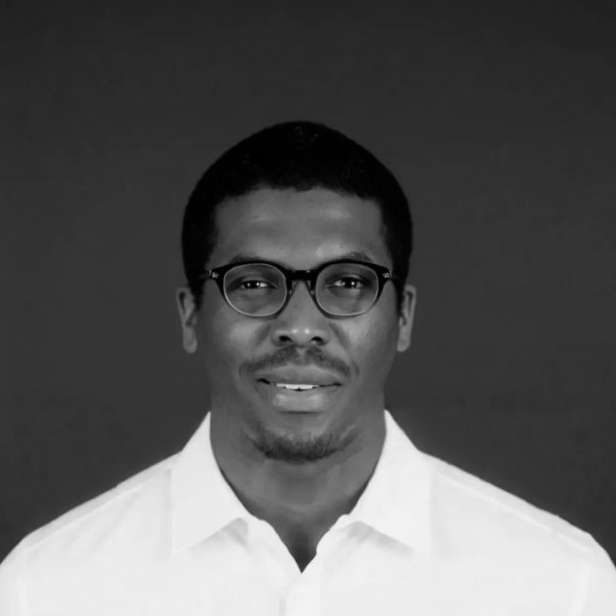
Dr Charles A. Lawry
Emlyon business school
Luxury and Art Publics: Artification or Hype?
Dr. Charles A. Lawry is a marketing professor at Emlyon Business School, where he teaches in the MSc program in Luxury Marketing. He holds a Ph.D. in Consumer Science (University of Arizona) and an M.A. in Ethnomusicology (Columbia University). Before entering academia, he worked as a digital strategist in New York City, helping heritage fashion brands adapt to the digital age. His combination of diverse academic and industry experiences informs his interdisciplinary approach to the study of luxury.
Dr. Lawry’s research explores the challenges of social and digital transformation within the global luxury market, with particular interests in emerging technologies, artification, and sustainability. He examines how these trends influence ideas of craftsmanship, pleasure, and the good life in the twenty-first century. His research has been published in the International Journal of Advertising, Psychology & Marketing, Dress: Journal of the Costume Society of America, and the Journal of Fashion Marketing & Management.
Abstract
Luxury and Art Publics: Artification or Hype?
Collaborations between luxury brands and art institutions are increasingly viewed as effective strategies for elevating brand prestige and promoting the arts in society. Prior research attributes the success of these collaborations to artification, a cognitive effect whereby consumers perceive luxury goods as art-like and artwork as culturally relevant. However, researchers do not fully understand how public culture and social media communities inform these collaborations, even though they often generate awareness for artists and luxury brands (e.g., Sarah Morris × Burberry, Yayoi Kusama × Louis Vuitton, etc). To address this gap, we conducted ethnographic fieldwork and an audience analysis at Prada Marfa (Study 1), followed by a thematic analysis of #GucciArtWall posts on Instagram (Study 2).
Drawing on Public Culture Theory, we identify three audiences—cognoscenti, aesthetes, and sojourners—who share both positive and negative word of mouth about these collaborations. We also find that creators post about these collaborations and leverage them to promote their own talents. This outcome suggests that collaborations can elevate the prestige of influencers, who borrow cultural capital from the art market and fashion world. However, our findings raise important questions about new challenges facing art institutions and luxury brands in the digital age. While such collaborations can enhance cultural relevance and desirability, they can also produce negative word of mouth and subtle content hijacking, which may dilute the cultural authority of art institutions and the exclusivity of luxury brands. Such darker sentiments are largely absent from existing studies, which focus on luxury clientele and do not examine the reception of broader public audiences or the effects of social media diffusion.
Supported by: